 Jim Rice, PhD from North Carolina State University collected data and gave a presentation on the lake in the Fairlake Subdivision on August 31, 2015. Jim is the North Carolina Extension Fisheries Specialist, for Pond and Reservoir Management, and a professor of Applied Ecology.
Notes from August 31, 2015 Study and Presentation by Jim Rice
Key Takeaways:
- Neutral pH is good
- Alkalinity is very good
- Oxygen levels aren’t bad
- We should catch and remove Bluegill and Bass from the pond, especially in the spring (starting 2016), until the Bass we catch are often bigger than 6-8 inches and we find a variety of sizes of Bluegill
- We expect the fish are safe to eat
Almost every Lake is Healthy
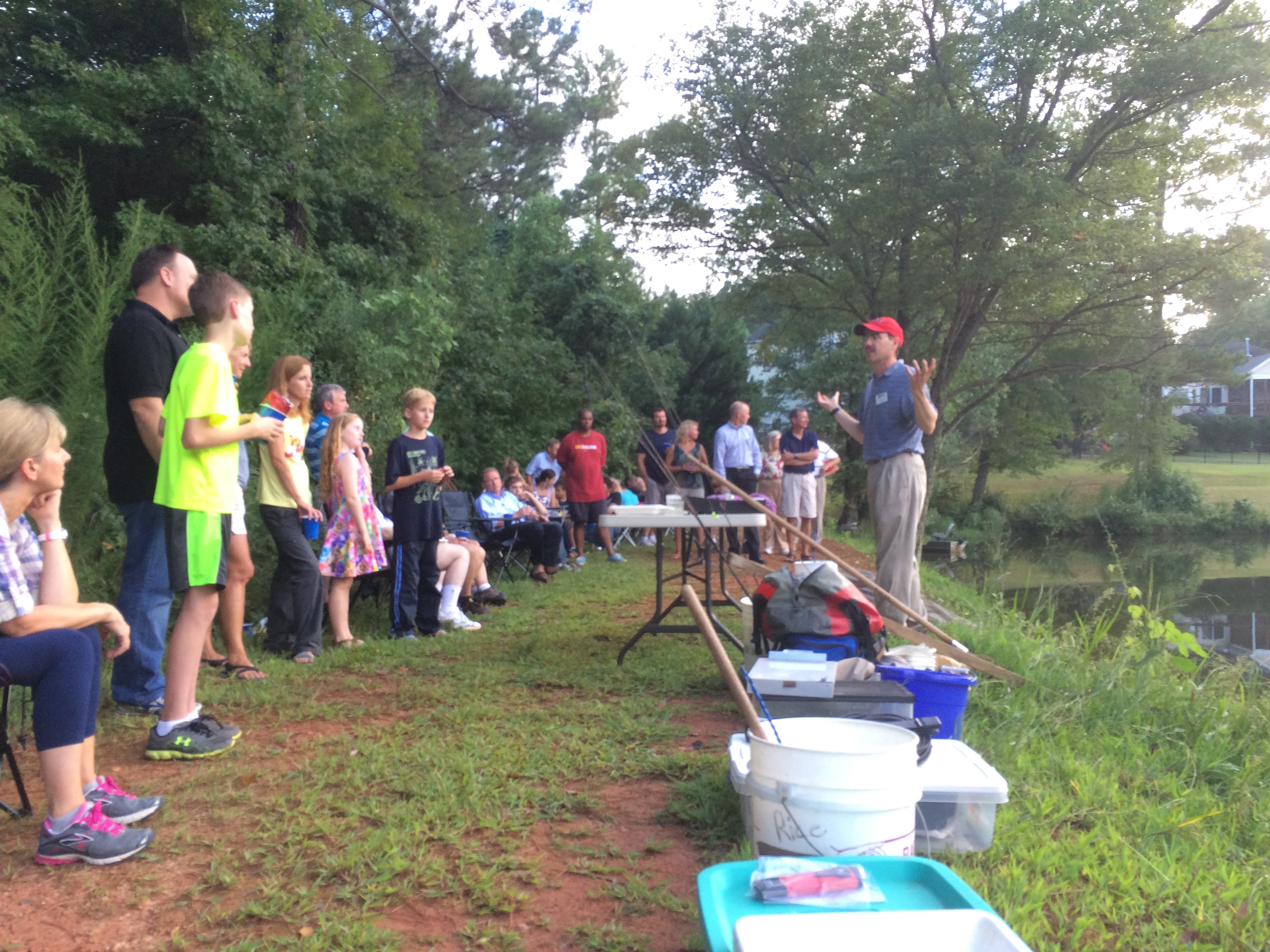
The pond ecosystem is healthy…but is it meeting your objectives?
What are objectives people have for the lake?
- Big fish
- Accessibility for canoeing
- Aesthetics — to look nice?
The Lake’s Greenish tint is caused by single-celled algae. All the photosynthesis happened in the top few feet.
Algae is eaten by plankton. These are the very bottom of the food web.
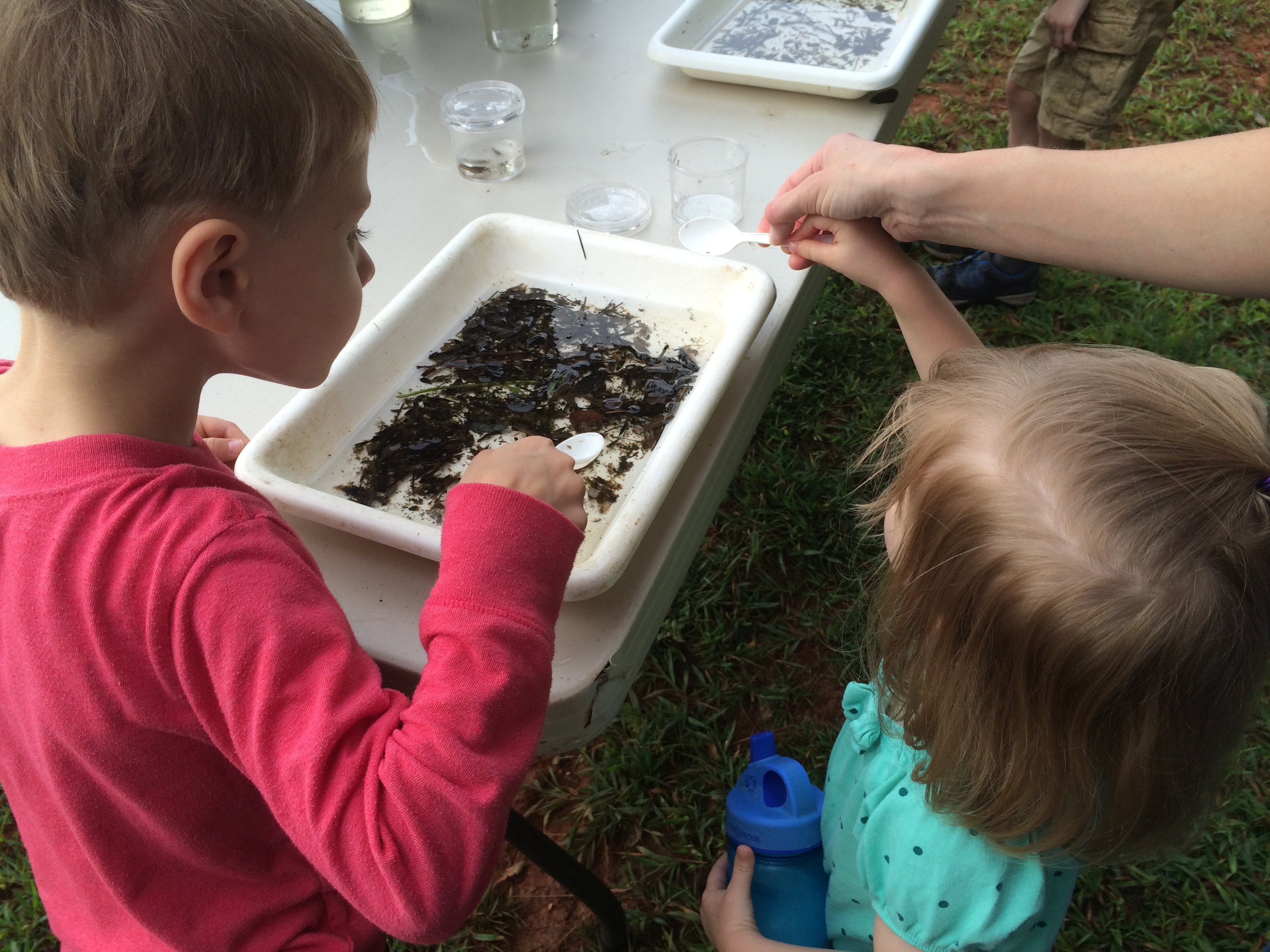
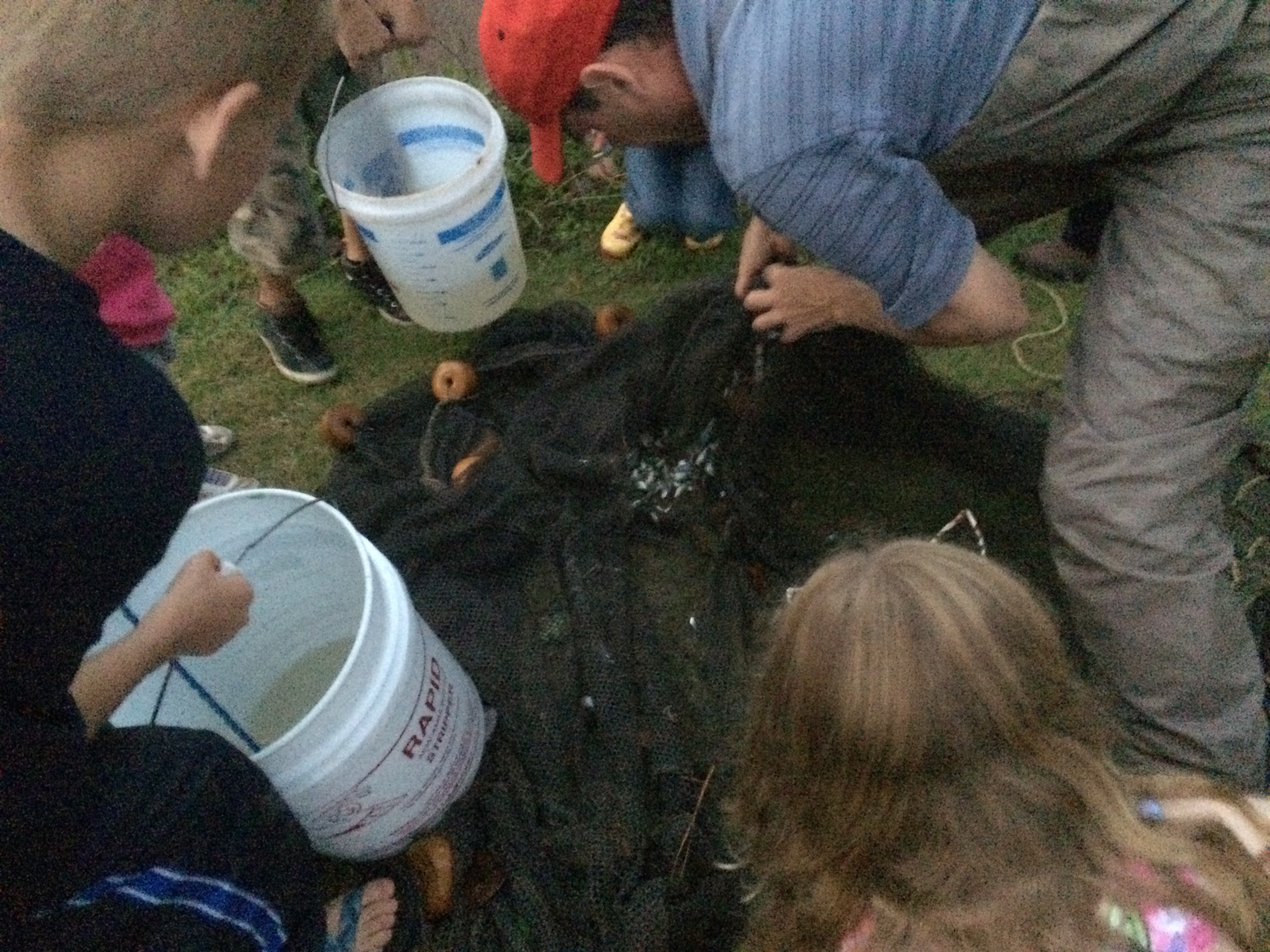
Jim used a filtered plankton net, and it catches mainly tiny crustaceans. They’re eaten by fish and other small animals.
The dip net caught mosquito fish. They’re related to guppies. They live very near shore. They survive the winter.
A typical NC pond has about 150 pounds of fish per acre.
Basics of Acidity and Alkalinity
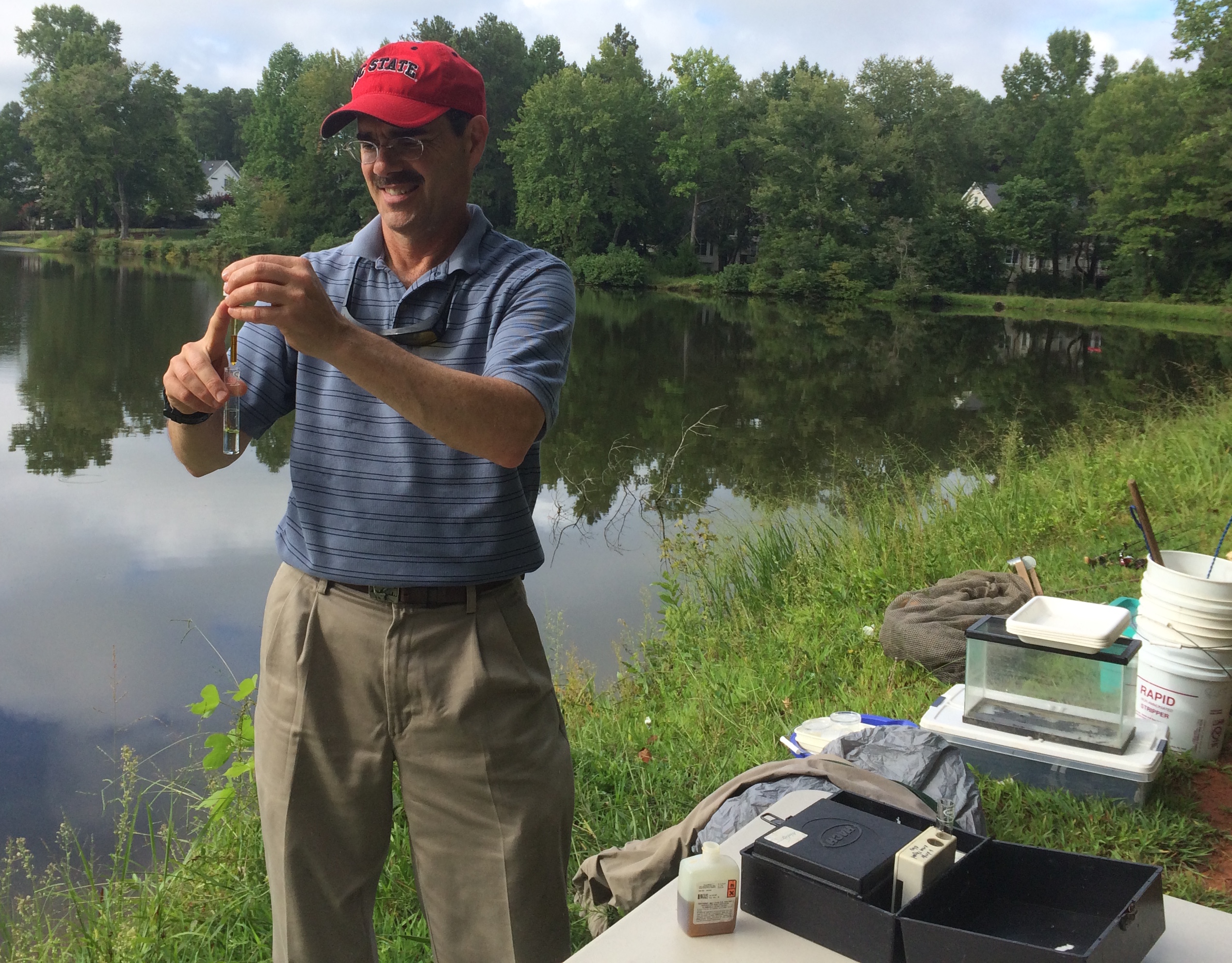
We tend to have acidic water in NC because we don’t have much of the basic stone — limestone.
If you have some good alkalinity (above 20 ppm), the pH can go up and down in a pond very little.
If alkalinity is below 20 ppm we treat the pond with limestone. It makes nutrients more available to algae (which supports the whole food web).
You can take samples of mud and send the dried sample to NCDA to get a liming recommendation.
Data from our Lake
- pH, tested twice: 7.1 to 7.4 — really close to neutral. Jim said, “That’s great!”
- Alkalinity: 30 ppm alkalinity. “Congratulations, you have a very healthy pond! It’s really rare that I see that.”
With decent alkalinity you’ll probably have stability of pH.
Fish Varieties Common to Small Lakes
- Bluegill sunfish. (Spawn multiple times per year. Fun to catch and good to eat.)
- Largemouth bass. (Spawn once per year.)
- Shellcracker or Redear sunfish. (Like to eat snails and shell fish. They’re harder to catch.)
- Channel catfish. (A good way to diversify the fishery. But you often have to stock periodically to maintain the population.)
- Crappy aren’t recommended for small ponds. They can have a really super abundant year — more than the bass can handle. Sometimes ponds in the 9-15 acre size range can be ok, but you may need a large bass density.
Animals in Fairlake’s Lake
- Bluegill Sunfish. The bluegill are pretty large.
- Largemouth Bass. Lots of bass in the 12-13 inch range.
- Bullhead Catfish are in here, but they’re not to big.
- Carp. We have Carp in this pond. They’re probably grass carp. They’re non-native and sterile; they are stocked to control aquatic weeds.
Turtles tend to not have a negative affect on fish. Even when you get a lot of them it doesn’t cause a problem.
Stunted Bass Population
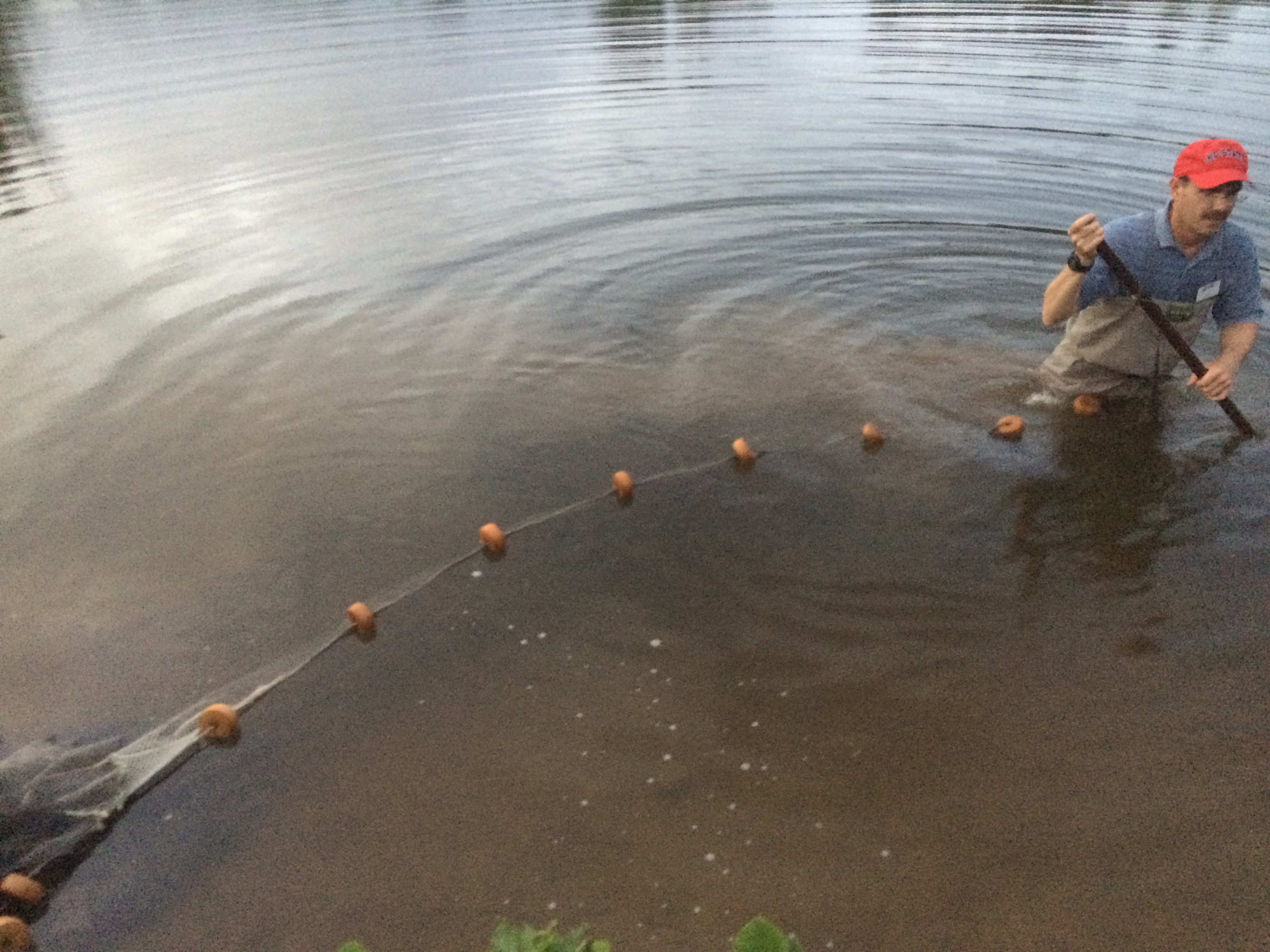
What’s probably happening is that the abundant small bass are eating all the small bluegill. They zoom up to about 11-12 inches…and they might be 2-6 years old. It’s a stunted bass population.
There’s a catch and release mindset about bass. Fairlake might need to remove a couple of hundred 11-12 inch bass, and throw back anything bigger.
Some fish do eat unguarded bass eggs.
Golden shiner is a good bait for bass on a hook. But the bass don’t normally eat them otherwise. And the golden shiners can eat all the bass eggs.
It’s best not to allow anyone to fish with live fish bait.
Food Safety
How do you know if the fish are safe to eat?
In general, Lakes have main categories problems:
- Pathogens, e.g. E. coli. This is regularly straightforward for the public health people to check.
- Contaminants in the tissue of fish, like ddt or pcb’s. Generally in a pond like this, it’s not a big problem.
Sometimes you can send fish in for testing, but you have to tell the lab what to test for. Crabtree lake has PCBs, for example.
The most common problem is mercury. Conditions in environment tend to make mercury problems. Mercury levels will be higher higher in the food chain.
Under the conditions we have at fairlake, we probably don’t have mercury problems.
It’s very rare for bluegill to reach consumption advisory warning levels.
Mercury issues are more common in bass, especially larger ones.
Leaves in the Lake
Periodically we’ll have people blow lots of leaves into the lake. The breakdown of the leaves uses up oxygen. There’s very little oxygen down low and that can cause fish kills if a mixing event occurs that upsets the normal summer stratification of the lake.
Oxygen Levels
- Top 3-4 feet 8.5 ppm oxygen
- 6-12 feet 3.5 ppm oxygen.
Jim Rice says that’s really not bad.
Fish kills are commonly caused by a few cloudy days (so lower oxygen), then thunderstorms with lots of wind and cold rain, and so the oxygen-free water gets stirred up. But this can cause a catastrophic fish kill.
Sometimes to prevent fish kill is to aerate it. One way is an infuser that stirs the water upwards and brings it up to the surface.
Most fountains is not very good aerators. They’re circulating water from the top that is already oxygenated.
There’s no harm in having a fountain. But unless is pulls water from the bottom it’s only aesthetic.
Dark/black bluegills are males.
There are a lot of bluegill. The best time to harvest a lot of bluegill is spring.
Contact Info:
James A. Rice
Professor of Applied Ecology & Extension Fisheries Specialist
North Carolina State University
Room 255 David Clark Labs
Box 7617, Raleigh, NC 27695-7617jrice@ncsu.edu
919-515-4592
Aquatic Toxicologist:
 Fairlake Subdivision, Wake Forest, North Carolina